Hi everyone, Sweet Caroline here!
The Beauty of a Plain Scone
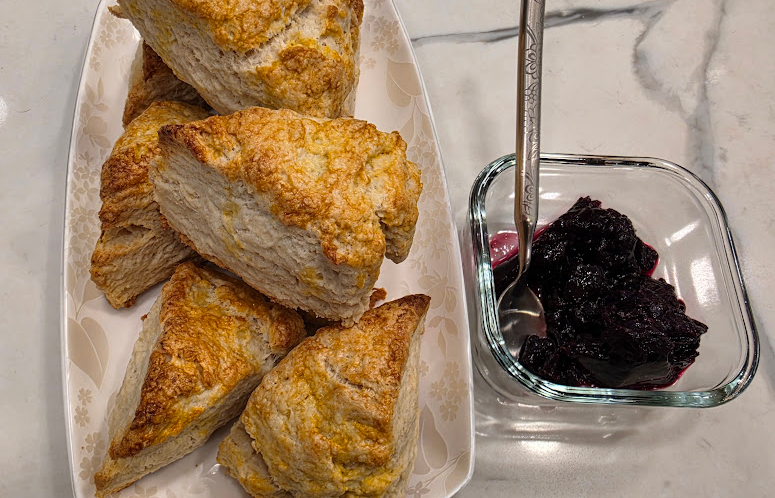
Today, I’m sharing one of the true cornerstones of my baking repertoire: the Classic Plain Scone. It may look simple, but its perfection comes from a beautiful balance of technique and temperature. When firm, chilled butter meets the strong initial heat of a fully preheated oven, the dough opens into tender, airy pockets that give a scone its signature texture. Master this contrast, and you’ll create what I call the Golden Standard—crisp at the edges, delicately risen, and wonderfully soft inside.
Why is ‘Plain’ the Height of Perfection?
n baking, the simpler the ingredients, the more clearly their quality shines. A plain scone is the most honest meeting point between high‑quality flour and rich, fragrant butter—nothing to hide behind, nothing to distract.
I look for two golden signs of success:
The Baker’s Smile That jagged crack along the side where the dough has lifted beautifully in the oven. It’s a badge of honor that guarantees a light, airy interior.
The Golden Crack A crisp, golden top that contrasts with a cloud‑like center.
A Scottish Legacy, A Royal Tradition
The scone’s story begins in 16th‑century Scotland, named after the historic “Stone of Destiny.”
It later became a beloved centerpiece of British Afternoon Tea thanks to Anna Maria, the Duchess of Bedford.
From royal tea rooms to cozy farmhouse tables, the plain scone has remained the most timeless and classic form.
Sweet Caroline’s Tips:
The ultimate way to enjoy a scone is with a traditional Cream Tea. But here’s the question: Jam first, or cream first?
- Devon Style: Slather a thick layer of clotted cream first, then add a dollop of strawberry jam on top. The richness of the cream hits your palate first, elevating the overall flavor.
- Cornish Style: Spread the jam across the base first, then crown it with a mountain of cream. The sweetness of the jam mingles beautifully with the cream for a vibrant taste.
- I’m a Devon girl at heart—there’s something magical about how clotted cream highlights the buttery notes of a scone.
You don’t need a professional bakery to achieve these results—you just need the right tools to maintain the integrity of the dough.”
🛒 🔗 Shop This Recipe (Recommended Tools & Ingredients)
🛠️Tools List
- Digital Scale: Baking Accuracy. Measuring by weight (grams) rather than volume ensures perfect, consistent results every time.
- Big Mixing Bowl: Provides enough space to mix ingredients without overworking the dough, keeping it light and airy.
- Silicone Spatula: Your best friend for folding the dough gently. It allows you to combine ingredients without deflating the air pockets.
- Silicone Brush: Essential for applying a light egg wash, ensuring your scones achieve that professional, glossy golden-brown finish.
- Baking Pan & Parchment Paper: Ensures even heat distribution and prevents the base from sticking, guaranteeing a clean, beautiful bake every time.
- Paring Knife or Scraper: A sharp, clean edge allows you to cut the dough without compressing the sides, helping the scones rise tall and straight in the oven.
- Sieve: Aerates the flour and baking powder, removing any clumps to ensure a delicate, tender crumb throughout.
- Cooling Rack: Promotes proper airflow, preventing the bottoms from becoming soggy due to trapped steam after baking.
Many people think a scone is just a quick biscuit, but it’s actually a precise study in temperature control. To get that professional lift, every ingredient plays a specific role.”
📝 Ingredients List (Copy & Save!)
Quality ingredients are the foundation of a truly authentic scone.
- All-Purpose Flour (415g): The structure of your scone. Always sift it to maintain a light, tender crumb.
- Cold Unsalted Butter (67g): The Secret to Flakiness. Small, cold pieces of butter melt in the oven, creating those signature, buttery layers.
- Eggs (193g / 4 Large): Acts as the structure-builder. They add richness and a stable base, preventing the scones from becoming too brittle.
- Heavy Cream (153g): The secret to the luxurious, melt-in-your-mouth texture. It provides the necessary moisture and fat that sets these scones apart from dry, bakery-standard versions.
- Honey (59g): Beyond adding a subtle, floral sweetness, honey is hygroscopic—meaning it helps retain moisture, keeping your scones fresh and soft for much longer.
- Baking Powder (18g): The powerhouse of the recipe. It ensures your scones rise vertically, creating that characteristic “Baker’s Smile” on the side.
- Salt (3g): The essential “flavor bridge.” It balances the richness of the butter and cream, elevating all the other ingredients and adding depth to the final flavor profile.
Sweet Caroline’s Tip:
Scones are highly sensitive to temperature. Always work in a cool environment; if your hands tend to be warm, chill your workspace and tools beforehand. This simple step is the secret to maintaining the integrity of the butter and achieving those perfect, flaky layers.
Step-By-Step Instructions
Mastering the perfect scone comes down to speed and minimal handling.
- Sift: Whisk together all dry ingredients to ensure a light, airy base.
- Cut in Butter: Quickly incorporate cold, cubed butter until the mixture resembles coarse crumbs. Keep it cold!
- Combine: Fold in the wet ingredients gently until just barely combined—do not overmix.
- Shape & Chill: Pat into a disc, cut into 6 wedges, and chill for 30 minutes to lock in the shape.
- Bake: Brush with egg wash and bake at 180°C (350°F) for 25 minutes until golden, tall, and beautifully risen.
Beyond the Classic Scone
Now that you’ve mastered the art of the perfect scone, you’re ready to explore even more treasures from my kitchen. Baking is a journey, and there’s always something new to create.
If you enjoyed the delicate, buttery layers of these classic scones, I highly recommend trying these reader-favorite recipes next: Click here to browse my full recipe collection.
Caroline’s Kitchen recipes here.
Let’s Talk Baking!
I’d love to hear how your bake turned out! Did you enjoy them with clotted cream or butter? Are you a Devon-style or a Cornish-style fan?
Share your experience in the comments below—I read every single one!
Classic Plain Scone
Equipment
- 1 Big Mixing Bowl for Dry Mix
- 1 Bowl for Liquid Mix
- 1 Silicone Spatula
- 1 Baking Pan
- 1 Parchment Paper
- 1 Scraper or knife
- 1 Sieve
- 1 Silicone Brush
- 1 Small Bowl for Egg Wash
Ingredients
- 415 g All-purpose Flour
- 18 g Baking Powder
- 67 g Cold Unsalted Butter Small Pea Size Cubed
- 193 g Eggs (Big Size 4 EA)
- 60 g Honey
- 153 g Heavy Cream Able to use Butter Milk
- 3 g Salt
Instructions
- Prep the Dry Ingredients Sift the all-purpose flour and baking powder into a large mixing bowl. Add a pinch of salt and whisk lightly to combine.
- Incorporate the Cold Butter Add the cold, cubed butter to the flour mixture. Using a silicone spatula ,quickly work the butter into the flour until the mixture resembles coarse crumbs,( about the size of peas) Caroline's Tip : Keep the butter as cold as possible to achieve a flaky texture.
- Mix the Liquid Ingredients In a separate small bowl, whisk together the eggs, heavy cream and honey. Create a well in the center of the dry ingredients and pour in the liquid mixture. Gently fold with a silicone spatula until just combined. Caroline's Tip : "Do Not Overmix " Overmixing develops too much gluten in the flour which makes the scones tough and rubbery rather than light and flaky. you want tiny bits of cold butter to remain intact so they create steam in the oven, resulting in a beautiful rise and airy layers.
- Shape and Chill the Dough Turn the dough out onto a lightly floured surface. Gently pat it into a disc about 1 inch (2.5 cm) thick. Caroline's Tip : Do not use a rolling pin: using your hands keeps the dough light. Wrap the dough in the refrigerator for 30 minutes. Caroline's Tip : This ensures the butter stays cold for a better rise.
- Cut and Arrange Preheat your oven to 350 ℉ ( 180℃) Take the chilled dough out and cut it into 6 even wedges (like a pizza) using a floured knife. Place the wedges onto a baking sheet lined with parchment paper, leaving some space between each scone.
- Egg Wash and Bake Brush the top of the scones with the egg wash for beautiful golden- brown finish. Bake for 25 minutes, or until the scones are tall and golden. transfer to a wire rack to cool slightly before serving. Caroline's Tip for serving. These scones are best served warm. Enjoy them with your favorite fruit jam, thick clotted cream, or a pat of butter. They pair perfectly with a hot cup of tea or freshly brewed coffee for the ultimate afternoon treat. For kids, these buttery scones make a wonderful snack when paired with a cold glass of milk or mug of creamy hot chocolate.