Classic Sourdough Bread for Beginners
A foolproof, step-by-step master recipe for baking a perfect sourdough bread with a crispy crust and chewy interior. Perfect for beginners!
Equipment
- 1 Large Mixing bowl
- 1 Dutch Oven
- 1 Banneton (Proofing Basket)
- 1 Scraper
- 1 Blade or Knife
- 1 Scale
Ingredients
- 350 g Bread Flour
- 240 g Water
- 8 g Salt
- 100 g Levain (=Soughdough Starter)
Instructions
Autolyse and Mixing
Mix your flour and water in a large bowl until no dry flour remains. Let it rest for 30-45 minutes to develop natural gluten. After the rest, add 100g of your refreshed, active levain and 8g of salt. Dimple the dough with your fingers and mix thoroughly until smooth.
Stretch and Fold (1st Fermentation)
Instead of heavy kneading, use the stretch and fold method to build structure. Wet your hands, grab one side of the dough, stretch it upward, and fold it over the center. Rotate the bowl and repeat for all four sides. Perform this routine 4 times, spaced 30 minutes apart.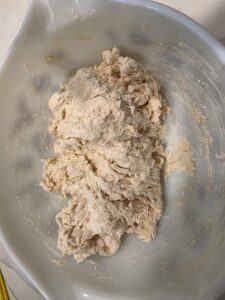
Shaping and Cold Retard
Once the dough is airy and has increased in volume by about 50%, gently shape it into a tight round or oval shape. Place it cut-side up into a floured banneton basket. Cover it well and transfer it to the refrigerator for a cold overnight rise (12 to 15 hours). This slow fermentation locks in the deep flavor.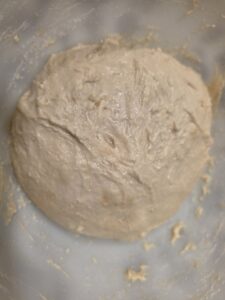
Scoring and Baking
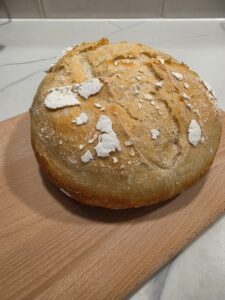
Preheat your oven to 245°C (475°F). If you have a Dutch Oven, preheat it as well. Turn your cold dough out onto parchment paper and use a sharp razor blade to make a deep slash across the top.- Bake Bake inside the covered Dutch oven for 20 minutes to trap the steam. Then, remove the lid, lower the temperature to 430°F (220°C), and bake for another 20 minutes until the crust turns a deep, crackly golden brown.